From Georgian to Grain Stores: Why Agricultural Vernacular is Shaping New Housing

We’ve had growing demand in recent years for vernacular housing developments in rural Hampshire, particularly schemes that take inspiration from traditional agricultural buildings and their surrounding landscape.

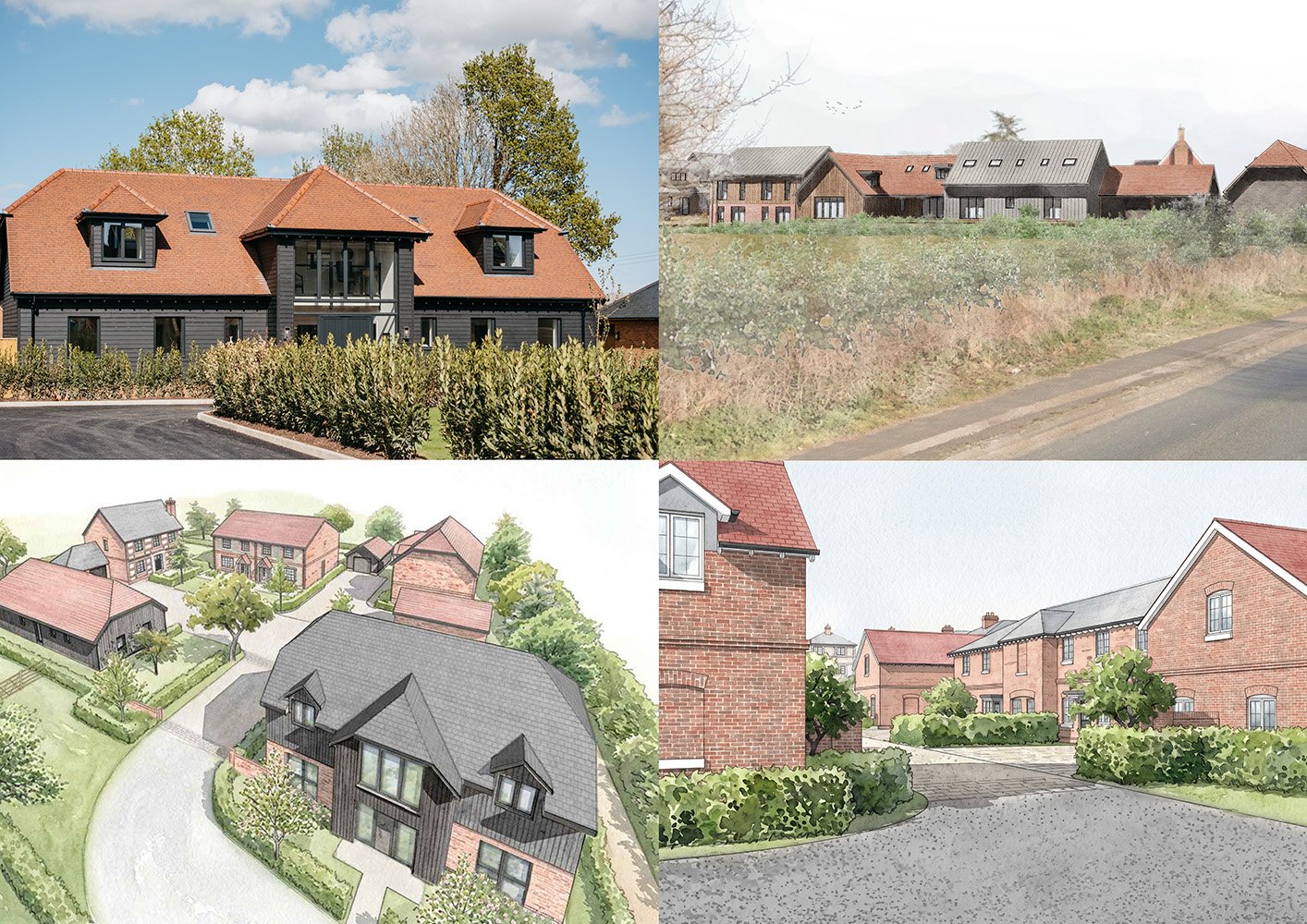
Over the past year or two, we’ve noticed something interesting in our developer work. Almost without realising it, a growing proportion of our projects have become agricultural vernacular schemes in rural locations—farmstead layouts, barn-inspired forms, and simple, robust material palettes of brick, tile, slate and weatherboarding.

It’s a noticeable shift. Not that long ago, much of the developer housing market—particularly in the South East—was defined by Georgian or Queen Anne-inspired styles, often applied as a familiar and popular architectural language across many types of development. Symmetry, sash windows and balanced proportions formed a well-established design approach.

Now, increasingly, the brief is different. Developers are asking for schemes that feel more rooted in place—less about formal architectural styling and more about context, heritage and authenticity. The rise of barn-style homes, courtyard groupings and looser, farmstead-inspired layouts reflects this change.

So what’s driving it?

There are likely a few overlapping factors at play.

1. The nature of available sites

Many opportunities now coming forward—particularly outside major settlements—are former agricultural sites or land on the edge of villages. Responding to that history with a vernacular approach is often a natural and appropriate design direction, both visually and in planning terms.

2. Planning policy and design guidance

There has also been a broader shift within planning policy. The National Planning Policy Framework places strong emphasis on well-designed development that responds to local character, encouraging schemes that reflect the defining qualities of their surroundings. [gov.uk]

Alongside this, local authorities are increasingly using design guides and codes to set clearer expectations for development, often promoting locally distinctive architectural responses from the outset.

Together, these influences tend to favour designs that draw on established rural building forms, particularly in countryside settings.

3. Market appeal and buyer expectations

There also appears to be a shift in what buyers respond to. Homes that suggest a sense of rural authenticity—even when newly built—have clear appeal, with the enduring popularity of barn conversions and farm cottages informing expectations for new development.

4. A more informal approach to layout and placemaking

Compared to the symmetry and discipline of Georgian-inspired design, farmstead schemes allow for more informal and varied compositions. This can result in more engaging spaces—courtyards, shared surfaces and framed views—and often contributes to a stronger sense of place.

A quieter shift

What’s perhaps most interesting is that this change hasn’t come about through any single moment or directive—it’s been gradual. As designers, we’ve simply responded to individual sites, client briefs and planning contexts, and only in looking back does the pattern become clear.

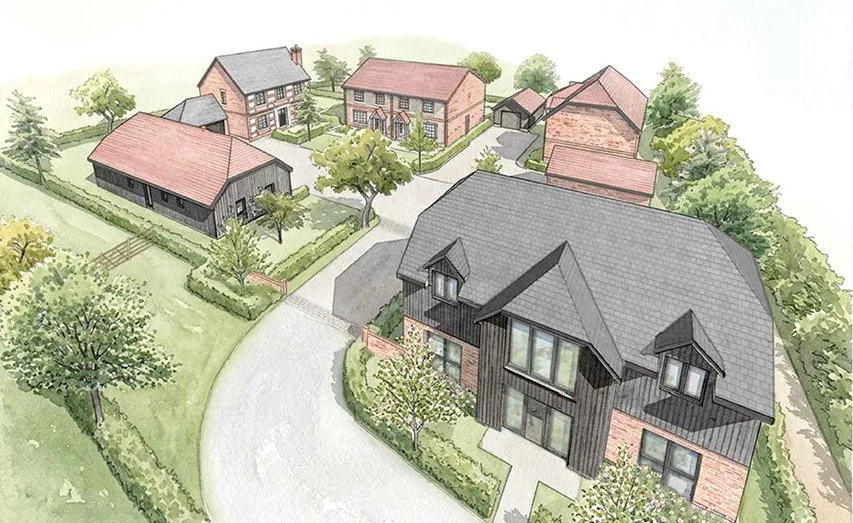
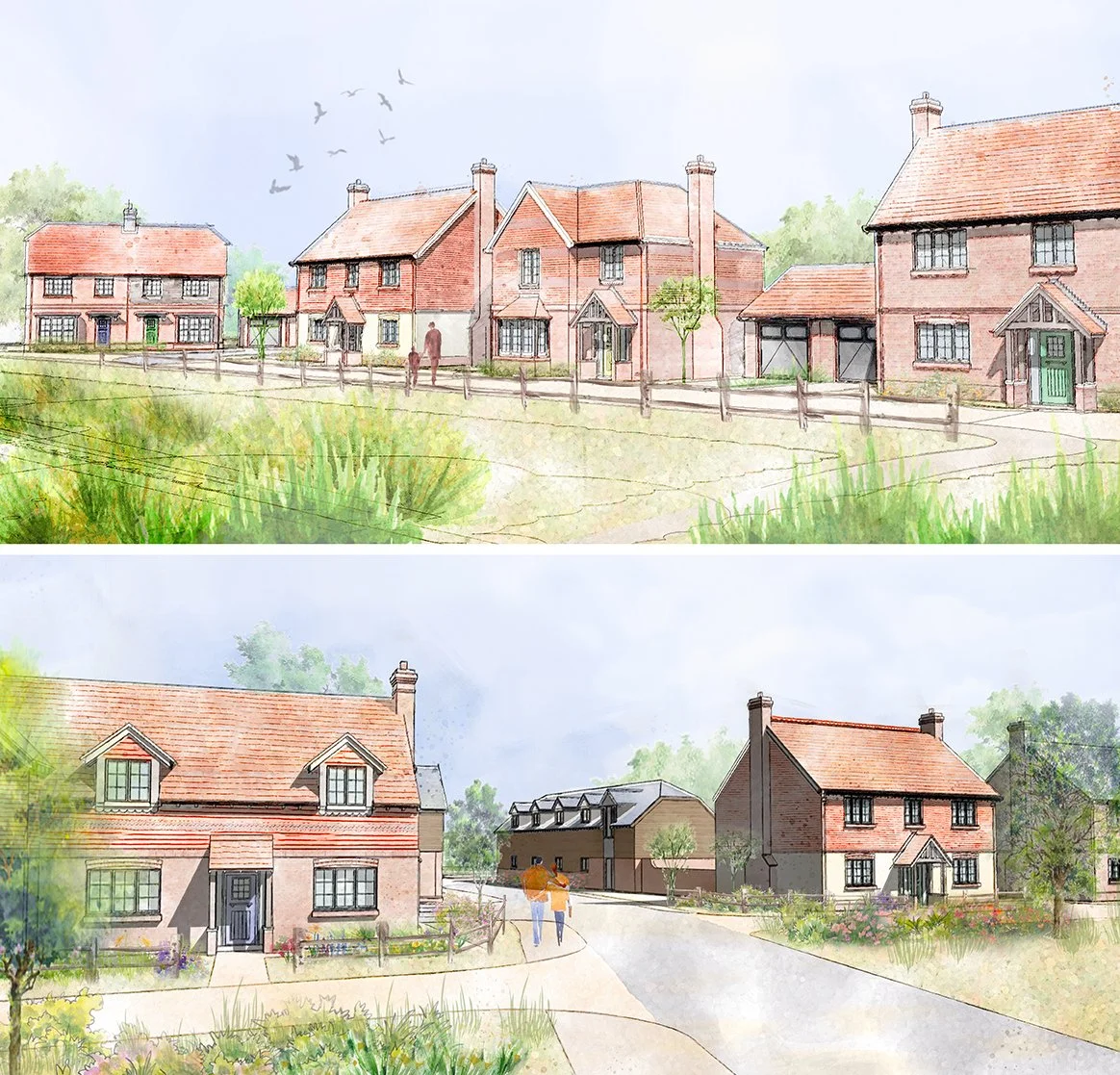
Projects like Oak Field Gardens in Sherborne St Johns demonstrate this approach in practice: modest in scale, rooted in the history of the site, and drawing on agricultural forms to create something that feels both familiar and well suited to its setting.

Where next?

Is this a long-term shift, or simply a reflection of the types of sites currently being promoted? It’s likely a combination of both. Greater emphasis on character, context and distinctiveness, together with market demand, suggests this direction is unlikely to be short-lived.

For now, agricultural vernacular represents a credible and well-received approach to rural housing, balancing planning considerations, commercial requirements and a strong sense of place.

If you’re exploring the potential of a rural site or looking to shape a development that responds positively to its setting, we’d be very happy to have a conversation.
Contemporary House Extension and Remodelling in Wickham, Hampshire

Radley House Partnership has recently submitted a planning application for the extension and remodelling of Alders, a detached split-level dwelling in Wickham, Hampshire.

The proposals seek to transform the existing 1970s property through a carefully considered programme of extensions, internal alterations and landscape improvements. Key elements include a new family kitchen and living space opening onto the rear garden, a front porch and double carport with home office above, replacement glazing, a new balcony, and extensive landscaping works.

The design introduces a contemporary architectural language centred around brick detailing, improved connections to the garden and upgraded external spaces, while remaining sympathetic to the varied character of neighbouring properties along the Lane.

As part of the proposals, the dwelling will also benefit from a number of sustainability improvements, including an air source heat pump, enhanced insulation and integrated solar panels.

The accompanying image illustrates the emerging design, generated from an original architectural sketch using AI-assisted visualisation techniques.

Completion of Frontage Repairs at St Andrew’s Church, Dibden Purlieu, Hampshire

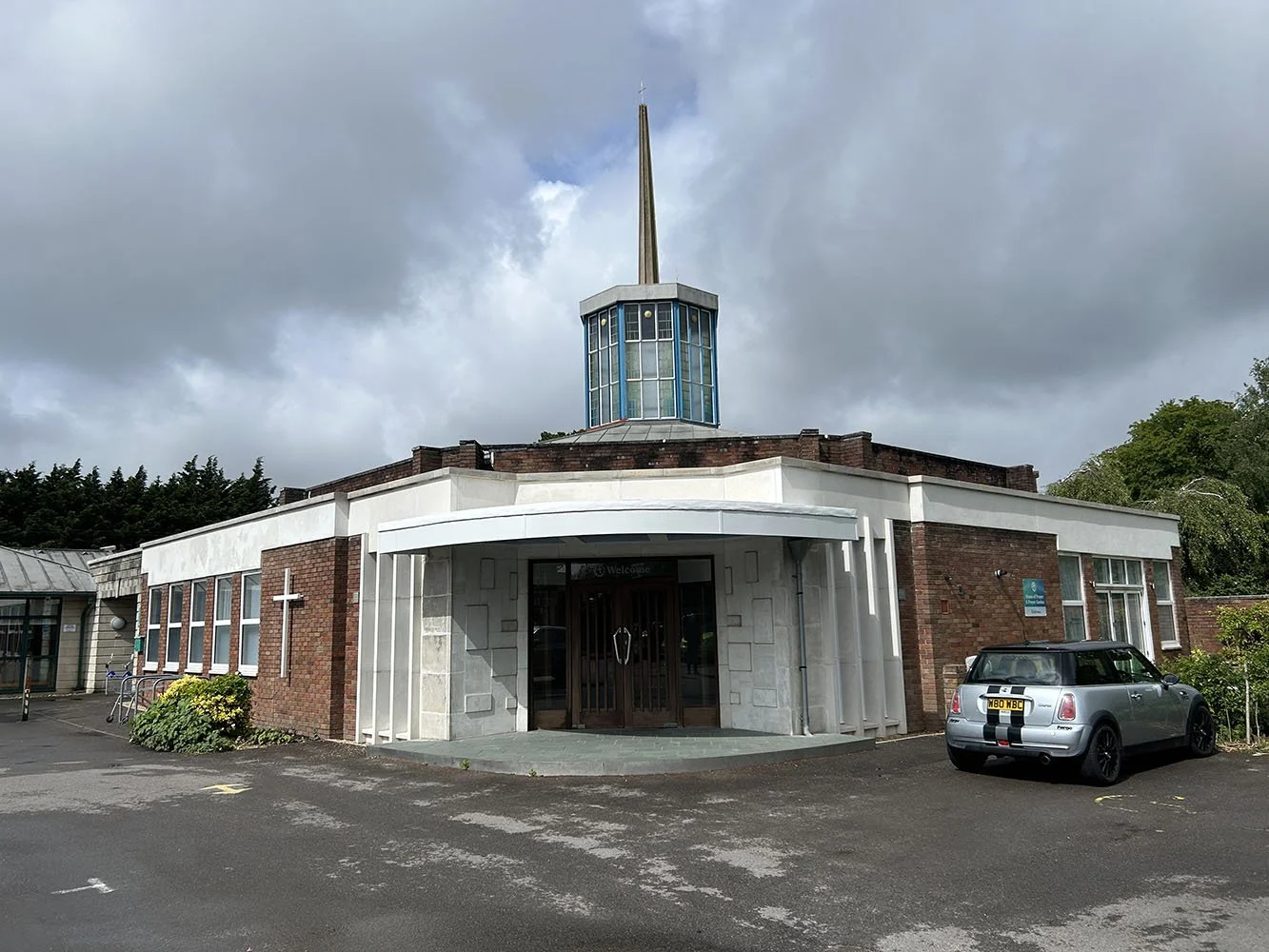
Radley House Partnership is pleased to announce the completion of a second phase of repair and refurbishment works to St Andrew’s Church, Dibden Purlieu, an interesting modern church building located at the heart of the New Forest village. The project was completed in May 2026 following a programme of works that commenced in April 2025.

Designed in the 1970s, St Andrew’s is a distinctive local landmark whose construction presents a unique set of maintenance and conservation challenges. This latest phase of works focused on the repair and partial reconstruction of the principal frontage, helping to safeguard the long-term condition of the building while improving its appearance and weather resistance.

The project included the replacement of deteriorated cast stone copings, mullions, cills and facing stones, together with new windows, replacement canopy roofing, upgraded soffits and lighting, and new lead flashings and weatherings.

Working closely with the church and contractors, T Coleborn & Sons, Radley House Partnership provided architectural services for the scheme, helping to deliver a comprehensive programme of repairs that will support the continued use of this important community building for years to come.

St Andrews Church before the repair and upgrade works….

St Andrews Church in May 2026 on completion.

Proposed Residential Development, Wield Road, Preston Candover, Hampshire

Radley House Partnership has been working with Shorewood Homes to prepare a planning application for eight new dwellings on land off Wield Road in Preston Candover, Hampshire.

The proposed scheme delivers a high-quality rural residential development of family homes, carefully informed by the character and setting of the surrounding area. Located within the Preston Candover Conservation Area, the design responds sensitively to the village context, reflecting the guidance set out in the Conservation Area Appraisal.

The development introduces well-considered built form that respects the scale, pattern and vernacular character of the locality, creating a cohesive and context-led scheme. A mix of dwelling sizes is arranged to form attractive, usable spaces, contributing to a layout that is accessible, sustainable and designed to support a high quality of life for future occupiers.

Proposed Residential Development, Kings Worthy Court, Kings Worthy, Hampshire

Radley House Partnership has been working with Shorewood Homes to submit a planning application for a new residential development of 14 dwellings in Kings Worthy, Hampshire, following the demolition of an existing 1970s office building.

The site lies within the Kings Worthy Conservation Area and forms part of the curtilage of Kings Worthy House, a Grade II listed building (designated in 2024), which is currently undergoing repair works ahead of its return to commercial use.

The proposed scheme delivers a sustainable housing development of high-quality market homes, carefully designed to respond to its sensitive historic context. The layout and architecture maintain a strong relationship with Kings Worthy House, Church Lane and the wider Conservation Area, including the adjacent Recreation Ground and nearby church.

The development draws on the local vernacular character of Kings Worthy, using appropriate scale, form and materials to integrate with its surroundings, while also protecting the residential amenity of neighbouring properties on Church Lane, Willis Waye and Court Road.

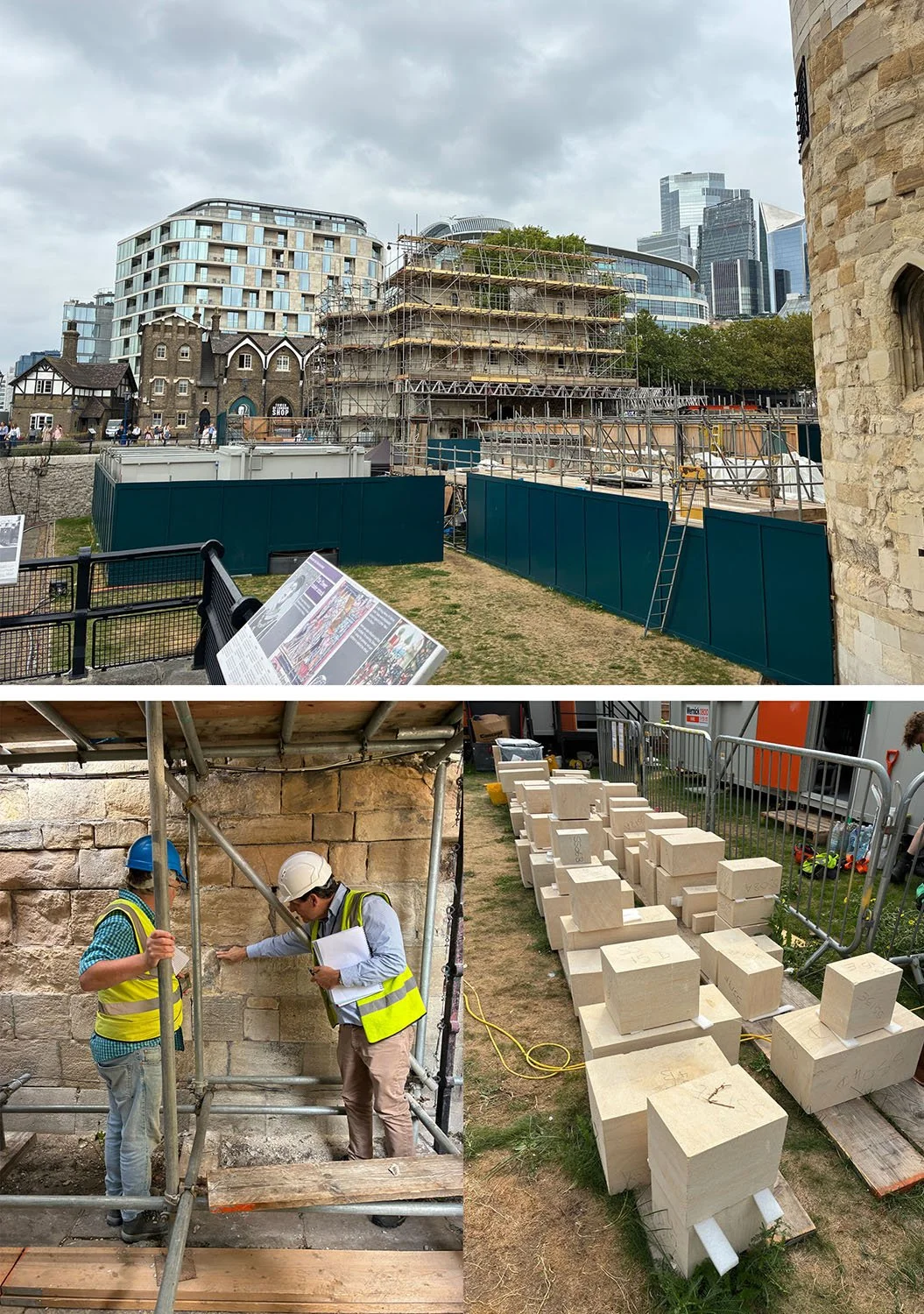
Middle Tower and Causeway Repairs, Tower of London, London

A different perspective on our ongoing heritage conservation works at the Tower of London.

Viewed from across the River Thames, the fully enclosed scaffold surrounding Middle Tower creates a dramatic contrast with the modern City of London skyline beyond—bringing together historic and contemporary architecture in a single frame.

Our conservation team continues to progress masonry repairs, timber works and metalwork restoration to this important part of the Tower’s main west entrance.

Can you spot the scaffold…

Vernacular Housing Development – Oak Field Gardens, Sherborne St John, Hampshire

We’ve had growing demand in recent years for vernacular housing developments in rural Hampshire, particularly schemes that take inspiration from traditional agricultural buildings and their surrounding landscape.

Oak Field Gardens, completed in 2025, is a good example of this approach. Designed for Shorewood Homes, the development sits on the edge of Sherborne St Johns and reflects the site’s history as a working farm, alongside nearby converted barns.

The scheme comprises nine family homes arranged in a farmstead-style layout, using simple forms and a carefully considered material palette to create a context-led countryside development that feels both natural and established.

Acting as Design Architects, we developed a planning-sensitive design that balances local character with modern requirements, resulting in a small, distinctive scheme that sits comfortably within its rural setting.

Private House, Longparish, Hampshire

The piles and slab for a bespoke private home being poured by Speedeck.  Radley House Partnership were responsible for the technical design of the new dwelling and will continue to be involved as the architect and Building Regulations Principal Designer during the course of the works on site.

Watermill Repair, Greywell, Hampshire

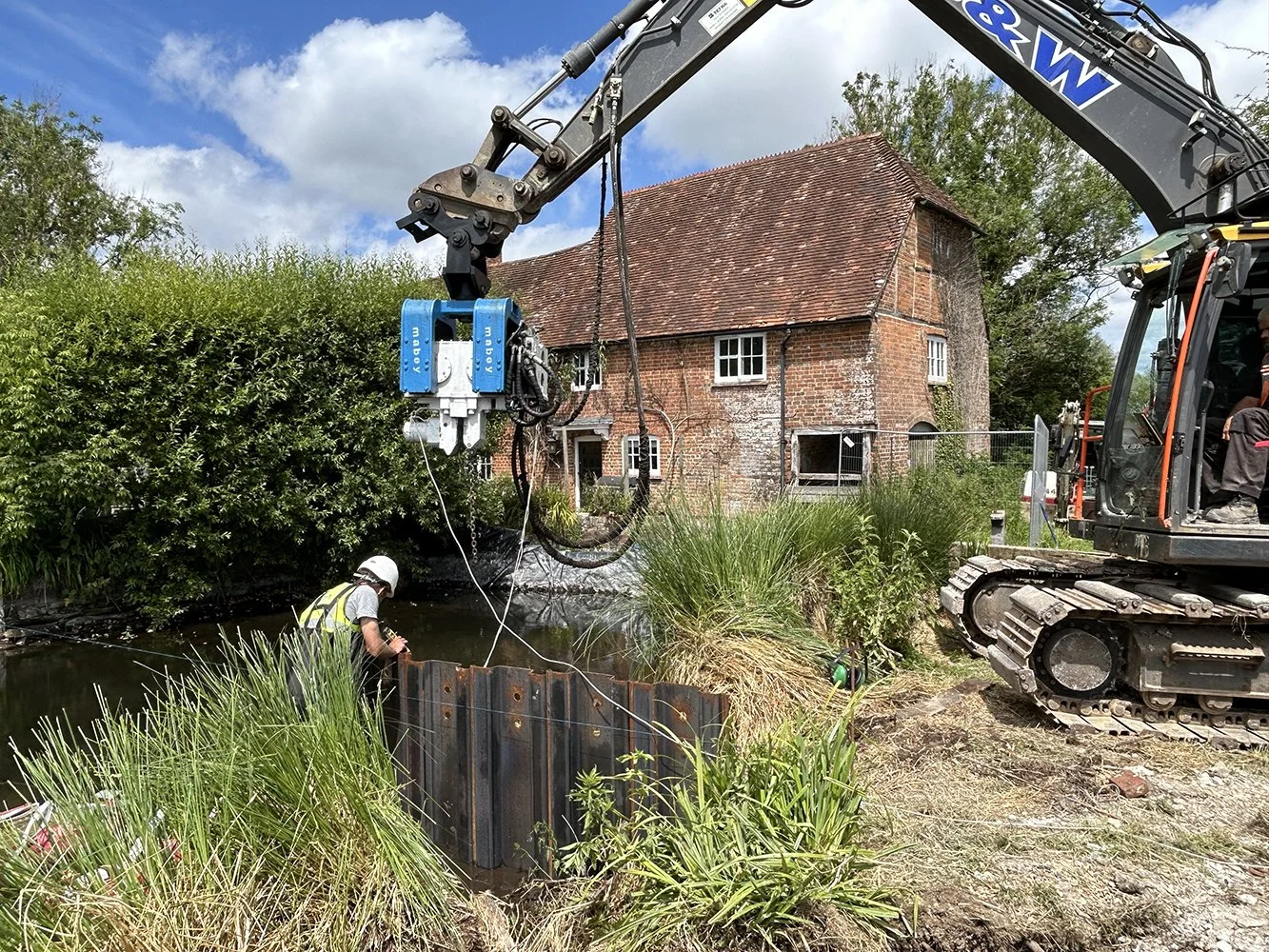
Proposals for the essential repairs on an historic watermill in Greywell, Hampshire, continue with remedial works planned for the drier seasons through 2026.  In 2023 the mill dam was breached causing a substantial volume of water to escape from the mill pond resulting in a significant threat to the listed building.  The breach caused scouring of material beneath the Mill necessitating a temporary sheet piled dam and by-pass pipe to be installed upstream. Further works included scaffold shoring and props, with the remains of the historic mill wheel being dismantled to enable access for investigations and monitoring.

Working with civil engineers and a millwright, Radley House Partnership have developed a scheme which will see improved control of the river through the mill race as part of the wider project to ensure the Mill building is appropriately conserved and protected for the long term.

Riverside and the Sling, Housing Development, Salisbury

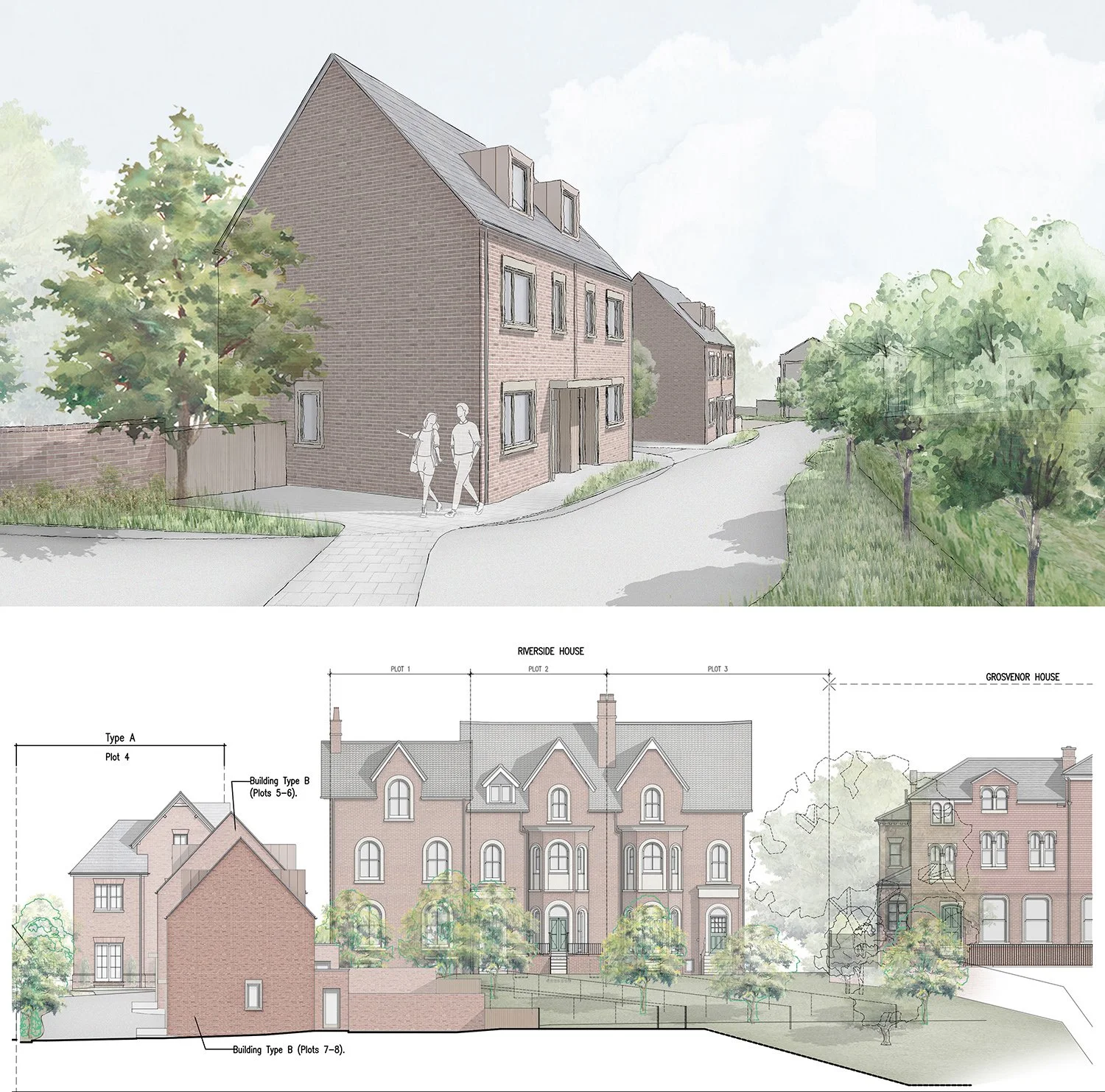
We are excited to announce a successful planning permission for a contemporary residential development of 17 new houses and apartments. 14 of the dwellings are to be new build, with existing institutional Victorian buildings to be converted into 3 town houses. 

The development is located on a highly unusual site near the centre of Salisbury.  There were several constraints associated with the site, including sensitive ecological challenges due to the development’s riverside location. Detailed negotiations were therefore required with the Environment Agency and Natural England.

Radley House Partnership designed the scheme as Architect and acted as lead consultant. The scheme was developed on behalf of developer Clydesdale in association with Atlas Planning Group. The wider design team also included;

EcoUrban

Transport Planning

Peach Ecology

Clarke Saunders

TGD Landscape

GAP

Redevelopment of Church House, Salisbury

We are pleased to announce planning permission has been granted for a new development in the centre of Salisbury. Listed Building consent was also granted for the scheme, which will consist of the careful redevelopment of a Grade I Listed building to form 7 new residential units. The Listed building is located in a prominent position within the city, adjacent to the former close ditch near Salisbury Cathedral.

Radley House Partnership were responsible for developing proposals for the sensitive change-of-use and conservation of this former medieval hall house. Early dialogue was required with Historic England and the Local Authority’s Conservation Officer, which was undertaken on behalf of developer Clydesdale and in association with Atlas Planning Group. The wider design team also included;


Elaine Milton Heritage and Planning Ltd

Floodling Consulting

EcoUrban

Peachecology

Clarke Saunders

TGD Landscape

Extension and refurbishment of a Winchester property

Following our last update in August, works are now nearing completion on this home extension and refurbishment in Bereweeke, Winchester. Final touches and finishes are being carried out internally, and external landscaping works are progressing well.

Overall works include a substantial whole house refurbishment, two storey side extension and rear kitchen extension, all designed and overseen by Radley House Partnership.

Honouring Memory: Restoring War Memorials for Future Generations

As Remembrance Sunday approaches, we reflect on the courage and sacrifice of those who served.

Radley House Partnership have been privileged to care for a range of war memorials, including the Over Wallop War Memorial, the Stoneham War Shrine, the Muslim Burial Ground in Woking, the Lych Gate at All Saints Church in Dibden Purlieu, and the Winchester College War Cloister.

Our work has focused on the careful restoration and repair of these structures, preserving both their craftsmanship and their solemn purpose. Each memorial, whether a cloister, shrine, or humble gate, serves as a quiet reminder of the individuals and communities they honour.

In tending to these spaces, we are mindful that our role extends beyond architecture: it is to help maintain a lasting connection to memory and gratitude. May these restored memorials continue to offer a place for reflection and remembrance, standing as enduring symbols of courage and sacrifice.

Middle Tower and Causeway, HM Tower of London

Exciting times at the Tower!  Our conservation team at Radley House are involved in many interesting projects at the Tower of London.  Most recently we have commenced a major programme of repairs and restoration for Middle Tower and the Causeway, which form part of the main west entrance.  The scaffolding and site hording in the picture below was erected during the summer prior to the arrival of new stone, which required petrological analysis to ascertain a correct match and comprehensive scheduling.  The focus of the works are the masonry repairs. However, there are also associated timber and metalwork repairs. Further updates to come.  

Bow Brook Farm, Bramley, Hampshire

We are excited to have received outline permission for 50 new homes within the village of Bramley, Hampshire. The scheme is to be designed as a sympathetic extension to the village, reflecting its rural setting. It will provide a policy compliant mix of affordable and market homes. The proposals were developed for Metis Homes, with Radley House Partnership as Architect and lead consultant.

The wider design team consisted of Nova Planning Limited, i-Transport, DM Mason Engineering, Urban Edge Environmental Consulting ltd, Clarke Saunders Acoustics, Savills, Barrie Draper, Aqua Callidus Consulting, DFL-uk and Luminate.